Trait inheritance guide
Persona 5 Royal Traits Guide: 7 Rules for Better Builds
Persona 5 Royal traits are build-defining passives, so the best fusion route is not always the cheapest recipe.
This guide explains how to choose a trait before fusion, when to keep a source Persona, which traits deserve route planning, why unique traits create exceptions, and how to use the Persona list, skill list, Gallows, and itemization pages together.
Quick answer
Choose the trait before choosing the final recipe
The practical rule is simple: decide the Persona's job first, then choose a trait that supports that job. A cheap fusion route is only good if it can carry the trait and skills your final build needs.
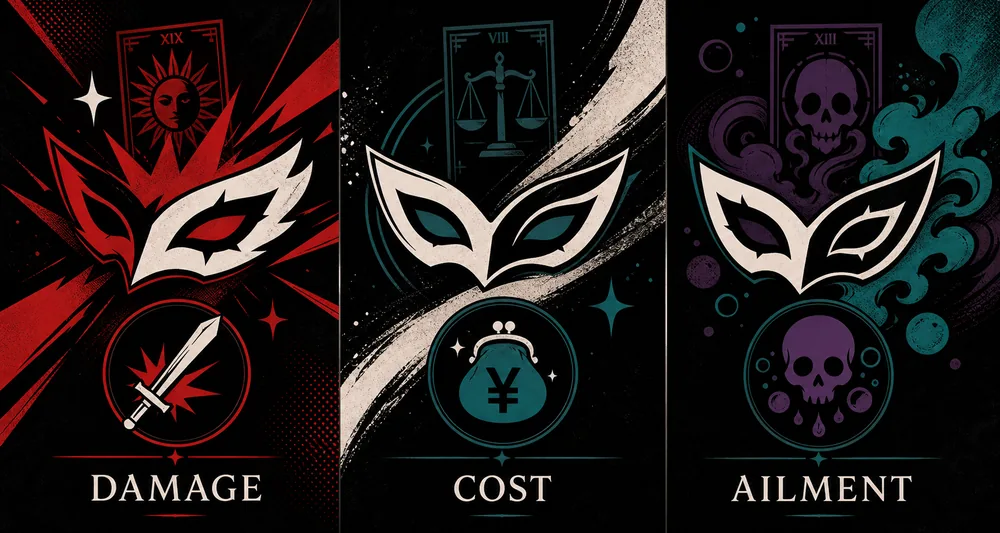
- Use damage traits for focused attackers, cost traits for long Palace routes, ailment traits for control builds, and support traits for auto-buff or healing roles.
- Check whether the trait belongs to a normal source Persona or a special/unique Persona before planning inheritance.
- Use the Persona list to find trait sources, the skill list to verify required skills, then the fusion calculator to test the route.
- Treat Country Maker, Universal Law, Pagan Allure, Fortify Spirit, and Pinch Anchor as page-worthy examples, not as universal answers.
- If the final Persona is already built, use Gallows only after the trait and key skills are stable.
- Keep one backup trait in mind; a slightly weaker trait can be better if the route is dramatically cleaner.
Contents
What this Persona 5 Royal traits guide covers
- 1. What traits do in Persona 5 Royal
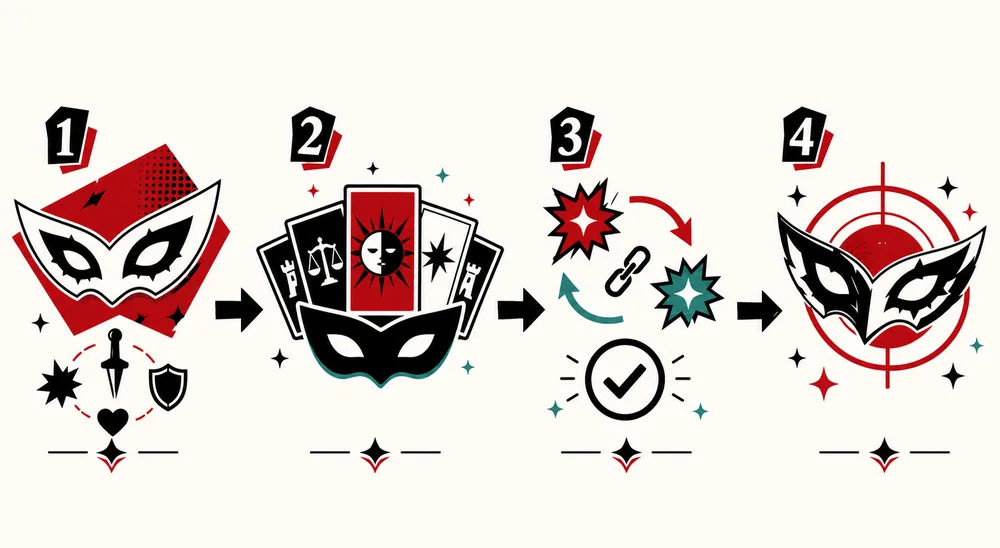
- 2. Use a four-step trait inheritance workflow
- 3. Match the trait to the build role
- 4. Check unique and special-case traits before routing
- 5. Balance traits with skills, Gallows, and itemization
- 6. Common trait planning mistakes
- 7. Practical trait examples to search first
- Persona 5 Royal Traits FAQ
Search intent answer
1. What traits do in Persona 5 Royal
Traits are passive modifiers attached to Persona in Persona 5 Royal. They can change damage, SP cost, ailment odds, healing value, support timing, or other build behavior. That makes a trait different from a normal skill: a skill is an action or passive slot, while a trait sits above the skill list and shapes the whole Persona's role.
For planning, the important question is not only which Persona has a strong trait. The useful question is whether that trait can reach the Persona you actually want to use. This is why a Persona 5 Royal traits guide belongs next to a fusion calculator: the trait decision changes which ingredients are worth paying for.
A good trait plan also protects you from overvaluing one famous name. If the build is only for compendium completion, a simple route with acceptable skills is enough. If the build is meant for a boss, challenge fight, or late-game setup, the trait becomes part of the route boundary and should be checked before the first ingredient is chosen.
| Trait goal | Common use | Planning risk |
|---|---|---|
| Damage | Boost one damage style or element | A cheaper recipe may not bring the right source trait. |
| Cost control | Reduce SP cost during long Palace routes | The build can lose power if cost is chosen over damage too early. |
| Ailment/control | Improve status setup and technical play | It needs matching skills, not just the trait name. |
| Support | Improve healing, buffs, or opening turns | Some support traits are useful only on a dedicated role. |
Workflow
2. Use a four-step trait inheritance workflow
Start with the final role: physical attacker, magic attacker, healer, ailment setup, support Persona, or itemization target. Then choose the source trait that supports that role. After that, confirm the source Persona can connect into your target route without breaking DLC settings, special fusion requirements, or skill inheritance.
The final check happens inside the calculator workflow. Search the target, compare recipes, open likely source Persona pages, and confirm the trait is still relevant after skills and itemization are considered. Do not solve the recipe first and think about the trait afterward; that often creates a costly rebuild.
Write the trait source beside the skill source. This small note prevents a common mistake: using one Persona for the desired trait, another for the desired skill, and discovering too late that neither path reaches the final target cleanly. The calculator helps only after the route goal is written clearly.
A reliable planning order
- Define the final build's job before opening the recipe list.
- Find one or two Persona that carry the candidate trait.
- Check whether those source Persona also carry or connect to required skills.
- Use the calculator and Persona pages to verify the route before spending yen.
Build fit
3. Match the trait to the build role
There is no single best P5R trait for every Persona. A trait that looks perfect on a damage Persona may be wasted on a healer. A cost-saving trait can feel amazing during exploration but may be less valuable on a boss-only nuke build. The decision should follow the Persona's job, not a tier-list habit.
Use named traits as examples. Country Maker is often searched because it is associated with Izanagi-no-Okami builds. Universal Law is useful when the build is about technical damage. Pagan Allure points toward magic damage planning. Fortify Spirit and other defensive or support traits belong in a different decision group.
For damage builds, judge the whole package: trait, Amp or Boost skills, Charge or Concentrate, resistances, and the Persona's inherited skill type. For support builds, judge timing, cost, and safety instead. The best trait is the one that makes the role more reliable.
| Build role | Trait direction | Example decision |
|---|---|---|
| Magic attacker | Element damage or broad magic boost | Choose the trait after deciding Amp, Boost, and Spell Master needs. |
| Physical attacker | Physical damage or critical support | Confirm Charge and weapon/skill plan before finalizing. |
| Ailment setup | Ailment odds or technical payoff | Pair the trait with the status skills that actually trigger the plan. |
| Support/healer | Healing, SP, buff, or survivability help | Do not overpay for damage traits on a support-only Persona. |
Exceptions
4. Check unique and special-case traits before routing
Some traits are searched more often because they sit on famous or late-game Persona. The risk is assuming every named trait behaves like a generic transferable option. Before building around a famous trait, open the Persona page and check whether the Persona is DLC, special fusion, max-confidant related, or otherwise awkward to route.
This is especially important for late-game names such as Izanagi-no-Okami, Kohryu, Yoshitsune, Satanael, Lucifer, and Michael. Their traits can be part of the build identity, but their routes may depend on fixed ingredients, high levels, or DLC ownership. A trait guide should therefore point you back to exact Persona pages instead of giving one universal recipe.
Unique traits deserve patience because their source often determines the route. If the source is DLC or special fusion, the recipe may not be available in every save. If the source is late-game, using that trait early may be unrealistic even when the name looks strong on paper.
Route repair
5. Balance traits with skills, Gallows, and itemization
A trait can make a build direction clear, but skills still decide whether the Persona is useful in battle. Before accepting a route, search the skill list for the exact passive, element, healing, or support skill you need. If the trait source cannot connect to those skills cleanly, a different source may produce a better final Persona.
Gallows is useful after the route is stable. Use it to add EXP or attempt a skill transfer, not to solve the trait problem from scratch. Itemization is a separate check: if the Persona is mainly being created for an Electric Chair reward, the trait may not matter as much as the normal item or Fusion Alarm item.
Gallows can repair a missing skill more easily than it can repair a bad trait decision. That is why trait planning comes before Gallows. Itemization can override the whole decision when the Persona exists only to create a weapon, armor, accessory, or skill card.
| Question | Use this page | Reason |
|---|---|---|
| Which Persona has the trait? | Persona List | Filter by name, level, Arcana, and trait. |
| Which Persona learns the skill? | Skill List | Find sources before choosing sacrifices. |
| Which ingredients create the target? | Fusion Calculator | Verify DLC-sensitive recipes. |
| Should I strengthen after fusion? | Gallows Guide | Use only after the trait route is stable. |
| Do I only need the item? | Itemize List | Compare normal and alarm rewards. |
Troubleshooting
6. Common trait planning mistakes
The most common mistake is choosing the final Persona first, taking the cheapest recipe, and only then asking why the desired trait is missing. Another mistake is treating a famous trait as mandatory even when the Persona's actual job does not need it. A third mistake is ignoring DLC settings, which can change available routes and make copied recipes look wrong.
Fix the process instead of guessing. Write down the role, target Persona, required trait, required skills, and whether itemization matters. Then test the route. When a result differs, change one variable at a time: source Persona, DLC setting, skill source, or final target.
When troubleshooting, keep screenshots or notes out of the critical path and use the data pages instead. Check the target page, the source page, DLC settings, and the intended skill. A single wrong assumption in any of those places can make the final Persona look like the calculator failed.
Examples
7. Practical trait examples to search first
Search examples are useful because they reveal intent. Persona 5 Royal Country Maker searches usually imply an Izanagi-no-Okami damage build. Universal Law searches imply technical damage. Pagan Allure searches imply magic amplification. Pinch Anchor searches often come from players trying to understand early or inherited traits rather than endgame optimization.
Use those examples as starting points, not as universal recommendations. A beginner route should usually prioritize clear recipes and useful skills. A late-game route can afford a stricter trait plan because the compendium, yen, Gallows options, and skill sources are easier to control.
The safest next action is to test one candidate trait and one backup trait. If the preferred trait creates an expensive or awkward chain, the backup route may produce a build that performs almost as well with far less yen and fewer fusion steps.
| Search term | Best page action | Why |
|---|---|---|
| persona 5 royal traits | New guide page | Broad informational intent and distinct from the calculator. |
| p5r traits | New guide page | Same intent, shorter wording. |
| persona 5 royal country maker | FAQ and example | Specific trait; better as a section unless a future page proves demand. |
| red text in skills persona 5 | FAQ support | Related confusion, but not the core trait page intent. |
FAQ
Persona 5 Royal Traits FAQ
What are traits in Persona 5 Royal?
Traits are passive modifiers attached to Persona. They influence build behavior such as damage, cost, ailments, healing, or support value, and they should be considered before finalizing a fusion route.
Can Persona 5 Royal traits be inherited?
Many normal traits can be passed during fusion, but famous, unique, DLC, or special-case traits require source checks. Always verify the source Persona and route before assuming a trait can reach the final target.
What is the best P5R trait?
There is no single best trait for every build. Damage traits fit attackers, cost traits help long routes, ailment traits need matching status skills, and support traits belong on dedicated utility Persona.
Should I choose the cheapest recipe if I need a trait?
Not automatically. The cheapest recipe is good only when it preserves the desired trait and key skills. If it loses either one, a more expensive route can be the better build.
Where should I check trait sources?
Start with the Persona list, open likely Persona detail pages, then use the skill list and fusion calculator to verify whether the trait source fits your final route.
Checked sources
Sources and media note
Official and first-party pages were checked for game identity and platform context. Local images are original explanatory graphics, not official Persona 5 Royal screenshots.